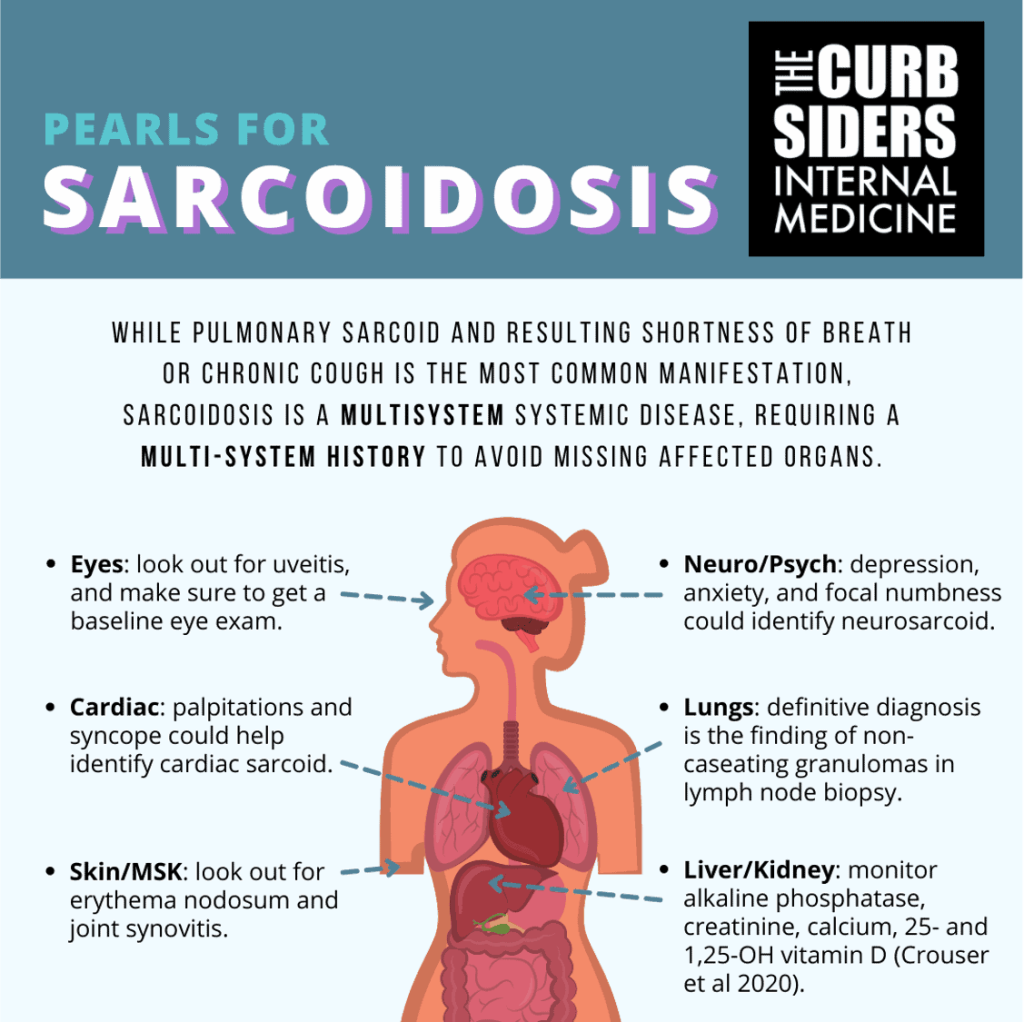
Sarcoidosis is one of the lesser-known causes of kidney disease and kidney damage. One of the problems with sarcoidosis is that it can be very difficult to diagnose. It shares symptoms with a lot of other diseases and some people may not have many obvious symptoms. In almost 50% of patients, it takes more than 3 doctor visits until a diagnosis is made.
So let’s lift the lid on what sarcoidosis is, what signs and symptoms to look out for and how it affects the kidneys as well as how we can use dietary and lifestyle changes and natural medicine to help manage this condition.
What is Sarcoidosis?
Sarcoidosis is a rare inflammatory disease that can affect different tissues and organs. When the immune system detects a threat in the human body, it sends special cells to fight off the infection or invaders. The ensuing battle causes some inflammation — redness, swelling, warmth or tissue damage. But in most people, when the fight is over, the inflammation goes away and the tissue returns to normal. Not so in this case.
For no known reason, the inflammation just keeps going in people with sarcoidosis. The immune cells start to group together into lumps called granulomas which are small clumps of immune cells that can form anywhere in the body. Sarcoidosis can affect any organ, but most commonly it involves the lungs, lymph nodes, skin and eyes. It can also affect the kidneys.
What causes Sarcoidosis?
The cause of sarcoidosis is unknown, but experts think it results from the body’s immune system responding to an unknown substance. Some research suggests that infectious agents (bacteria or viruses), chemicals, dust and an abnormal reaction to the body’s own proteins could be responsible for the formation of granulomas in people who are genetically predisposed.
Risk factors for developing Sarcoidosis
Age- you can develop sarcoidosis at any age but often occurs between the ages of 20 and 40 years.
Gender- women are slightly more likely to develop the disease.
Race- people of African descent and those of Northern European descent have a higher incidence of sarcoidosis. African-Americans are more likely to have involvement of other organs along with the lungs.
Family history and genetics- such as having a close relative with sarcoidosis.
Medications- such as certain types of HIV medicines and monoclonal antibodies used to treat cancer or overactive immune response.
Other medical conditions- such as lymphoma.
Living or working near insecticides, mould, or other substances that may cause inflammation. You may also be around these substances as healthcare, farming, automotive industry worker, or firefighter.
Signs and Symptoms of Sarcoidosis
Some people with sarcoidosis don’t have any symptoms. However, general symptoms may include:
Fatigue
Fever
Weight loss
Joint pain
Symptoms vary depending on the part of the body affected. Sarcoidosis can occur in any organ, but it most commonly affects the lungs. Lung symptoms can include:
Dry cough
Shortness of breath
Wheezing
Chest pain around your breastbone
Sarcoidosis may cause skin problems, which may include:
A rash of red or reddish-purple bumps, usually located on the shins or ankles, which may be warm and tender to the touch
Disfiguring sores (lesions) on the nose, cheeks and ears
Areas of skin that are darker or lighter in colour
Growths under the skin (nodules), particularly around scars or tattoos
Sarcoidosis can affect the eyes without causing symptoms, so it’s important to have your eyes checked regularly. When eye signs and symptoms do occur, they may include:
Blurred vision
Eye pain
Burning, itching or dry eyes
Severe redness
Sensitivity to light
Symptoms of kidney problems caused by sarcoidosis include:
Dehydration
Inflammation
Kidney stones
Reduced kidney function
Prognosis of Sarcoidosis
A sarcoidosis diagnosis means something different for everyone. In some cases, people have no symptoms, require no treatment, and go into remission in a few months or years. In others, the lumps can cause serious problems with the way affected organs work and can lead to pain, trouble breathing, limits on your activity, or painful and visible rashes.
If you have sarcoidosis, the diagnosis can be dangerous. Prognosis is worst when the disease affects the heart and brain, or when significant lumps or scarring affect how well your organs work. In these cases, lasting side effects or sudden, severe problems can occur because of the disease.
Sarcoidosis and the Kidneys
Kidney involvement sometimes occurs in people with sarcoidosis. Kidney manifestations may include:
Abnormal calcium metabolism (high calcium levels in blood & urine)
Kidney stones
Calcium deposits in the kidneys
Acute interstitial nephritis
Kidney involvement is reported to occur in approximately 35 to 50% of people with sarcoidosis, even if, in many cases, the disease may be silent and undetected for many years.
Nephrolithiasis and Nephrocalcinosis in the kidneys are the most common renal manifestations of sarcoidosis so let’s take a closer look at what this is and why it occurs.
Nephrolithiasis and Nephrocalcinosis
Nephrolithiasis is a fancy word for kidney stones and nephrocalcinosis is calcium deposits in the kidney. Kidney stones have been found in about 10% of patients with sarcoidosis and calcium deposits in about 5% of patients but it is a significant cause of kidney disease in people with sarcoidosis.
Kidney stones and calcium deposits occur because people with sarcoidosis commonly have abnormal calcium metabolism. Hyperabsorption of dietary calcium occurs in up to 50% of people with sarcoidosis. The excess calcium is excreted in the urine leading to high levels of calcium in urine in approximately 40-62% and high levels of calcium in the blood in around 2-63% of patients with sarcoidosis.
Why does this happen?
Elevated calcium levels occur in patients with sarcoidosis because of the uncontrolled production of 1,25-dihydroxy vitamin D3 (Calcitriol) by macrophages that form part of the granulomas found in sarcoidosis.
Calcitriol is the active form of vitamin D and among its many roles, it increases the amount of calcium absorbed in the gut. Increased absorption of calcium can cause elevated blood calcium levels and elevated calcium in urine because the body tries to excrete the excess calcium in urine.
Higher levels of calcium in the urine can result in the development of kidney stones and/or deposits of calcium within the kidneys.
Interstitial Nephritis
Interstitial nephritis can also occur in people with sarcoidosis. Interstitial nephritis is a kidney condition characterised by swelling in between the kidney tubules. The most common symptom of interstitial nephritis is a decrease in the amount a person urinates however at times, people can have no symptoms.
Other symptoms of interstitial nephritis include:
A fever
Blood in urine
Fatigue
Nausea and vomiting
Swelling
Elevated blood pressure
Treatment of Sarcoidosis
Because sarcoidosis is an inflammatory disorder in which oxidative stress appears to be involved, one of the key ways to manage sarcoidosis is by reducing inflammation and oxidative stress.
The main medical treatment of sarcoidosis is the use of corticosteroid medications such as prednisolone which is used to reduce inflammation and also to suppress the immune system because sarcoidosis may be the result of an overreaction of the immune system.
Let’s look at some other key ways to help lower inflammation in the body to assist in the treatment of sarcoidosis:
Eat an alkaline diet that is high in anti-inflammatory foods and antioxidants
Maintain a healthy weight
Avoid red and processed meats and dairy
Avoid processed foods
Avoid gluten
Quit smoking and avoid second-hand smoke
Exercise regularly
Get enough sleep
Meditate- studies show that meditation lowers inflammation and has a positive effect on the immune system
Add herbs and spices to your diet such as ginger, turmeric, cinnamon, garlic, cayenne, black pepper, clove and rosemary
Drink green tea
Herbal and Nutritional Supplementation
As I’ve already mentioned, people with sarcoidosis have higher levels of inflammation in the body. Chronic inflammation doesn’t just drive sarcoidosis, but it is also a key driver for most chronic health conditions including cardiovascular disease, diabetes and kidney disease so reducing inflammation is of primary importance for all aspects of health.
Increased formation of reactive oxygen species (ROS), resulting in high levels of oxidative stress is also suggested to play a role in the pathogenesis of sarcoidosis and studies have shown that people with sarcoidosis have reduced antioxidant levels with those with the most severe disease having the lowest antioxidant capacity.
Nutritional and herbal supplements can help to protect against ROS-mediated damage, reduce elevated inflammation and protect the kidneys from damage. Key herbs and nutrients include:
Key antioxidant and anti-inflammatory herbs: Turmeric (Curcumin), Ginger, Boswellia, Rehmannia and Resveratrol.
Key antioxidant and anti-inflammatory nutrients: Omega-3 fatty acids, SPMs (Specialised Pro-resolving mediators), Quercetin, Bromelain, Alpha lipoic acid, Coenzyme Q10, vitamin C, vitamin E and N-acetyl cysteine.
Treatment of Nephrolithiasis and Nephrocalcinosis
If you have sarcoidosis, it’s really important that you have your blood and urinary levels of calcium monitored to assess for hypercalcaemia (high blood calcium levels) and hypercalciuria (high calcium in the urine).
Those people with hypercalcaemia and hypercalciuria are at a greater risk of developing kidney stones or calcium deposits in the kidneys which can go on to cause kidney damage and kidney disease.
Tips for those with elevated calcium levels:
Avoid calcium supplements and also make sure you look closely at any vitamin supplements you are taking to ensure they don’t contain calcium
Keep hydrated- make sure you drink enough water, adequate hydration helps to reduce the formation of kidney stones
Don’t take vitamin D supplements unless under the supervision of a healthcare provider who is aware of your sarcoidosis diagnosis
Speak to your healthcare practitioner about whether you need to reduce calcium-rich food in your diet
Limit dietary oxalates- high oxalate levels are found in foods such as spinach, cola, coffee, chocolate, strawberries, nuts, wheat bran and black tea. Oxalates can bind with calcium causing calcium oxalate kidney stones
Add lemon to your water- you’ll need about half a cup of lemon juice added to water throughout the day to get enough citric acid to help inhibit the formation of calcium kidney stones
Reduce salt in your diet- high sodium excretion also leads to higher levels of calcium excretion in the urine
Consider supplementing with vitamin K2- vitamin K2 funnels calcium into bones to strengthen bone mineral density while also preventing dangerous arterial calcification that occur with elevated calcium levels
Drink Nettle leaf tea- nettle leaf may reduce the risk of kidney stones because of its diuretic properties. Animal studies have shown that nettle leaf decreased elevated levels of calcium and actually dissolved calcium oxalate kidney stones
Sarcoidosis
Vitamin D testing in people with sarcoidosis
Two forms of vitamin D can be measured in the blood, 25-hydroxyvitamin D and 1,25-dihydroxy vitamin D. The 25-hydroxyvitamin D is the major form found in the blood and is the relatively inactive precursor to the active hormone, 1,25-dihydroxy vitamin D. Because of its long half-life and higher concentration, 25-hydroxyvitamin D is commonly measured to assess and monitor vitamin D status in individuals.
In people with sarcoidosis, however, testing 1,25-dihydroxyvitamin D (the active form of vitamin D) is likely to be more important. As I mentioned earlier, people with sarcoidosis may have elevated levels of 1,25-dihydroxyvitamin D because of its production by macrophages that form part of the granulomas found in sarcoidosis.
Studies have shown that even though some people with sarcoidosis have low levels of 25-hydroxyvitamin D, they may still have elevated levels of 1,25-dihydroxyvitamin D (active vitamin D) and if high doses of vitamin D are given to them there is an increased risk of developing hypercalciuria and/or hypercalcaemia.
Don’t forget
Make sure you discuss any new herbal or nutritional supplements with your healthcare practitioner first to ensure they are appropriate for your use, especially if you are taking any pharmaceutical medications.
Hopefully, you’ve found this review of sarcoidosis and some tips to help manage it helpful. If you have, please let me know by clicking the ‘SHARE’ button below and head over to our Facebook page if you have any questions or comments about this article.
Autoimmune diseases are a group of conditions in which the immune system mistakenly attacks the body’s own tissues. When exploring the connection between autoimmune disease, gut health, and chronic kidney disease (CKD), several key autoimmune conditions are particularly relevant. These include Systemic Lupus Erythematosus, IgA Nephropathy, ANCA-Associated Vasculitis (AAV), Anti-Glomerular Basement Membrane Disease, Sjögren’s Syndrome,…
Chronic kidney disease (CKD) has traditionally been viewed as a disorder of blood pressure, blood sugar and kidney filtration. However, emerging research into the gut–kidney axis suggests that CKD may also be deeply connected to the health of the gut microbiome. Could chronic kidney disease partly be a microbiome-driven condition? According to the Centres for…
Introduction If you’ve been diagnosed with chronic kidney disease (CKD), you’ve likely heard about creatinine, eGFR, and potassium levels. But there’s a crucial enzyme that most doctors and even medical textbooks still aren’t discussing: renalase. Discovered only in 2005, this remarkable protein plays a central role in kidney health, blood pressure regulation, and the body’s…

 By Emily Cahill N.D.