A comprehensive guide to understanding the critical relationship between thyroid function and kidney health
When we think about kidney disease, we often focus on diet, blood pressure, and diabetes management. But there’s a crucial connection that’s frequently overlooked in conventional medicine: the profound relationship between your thyroid and your kidneys. This connection could be the missing piece in your kidney health puzzle.
Understanding Your Thyroid: The Body’s Master Regulator
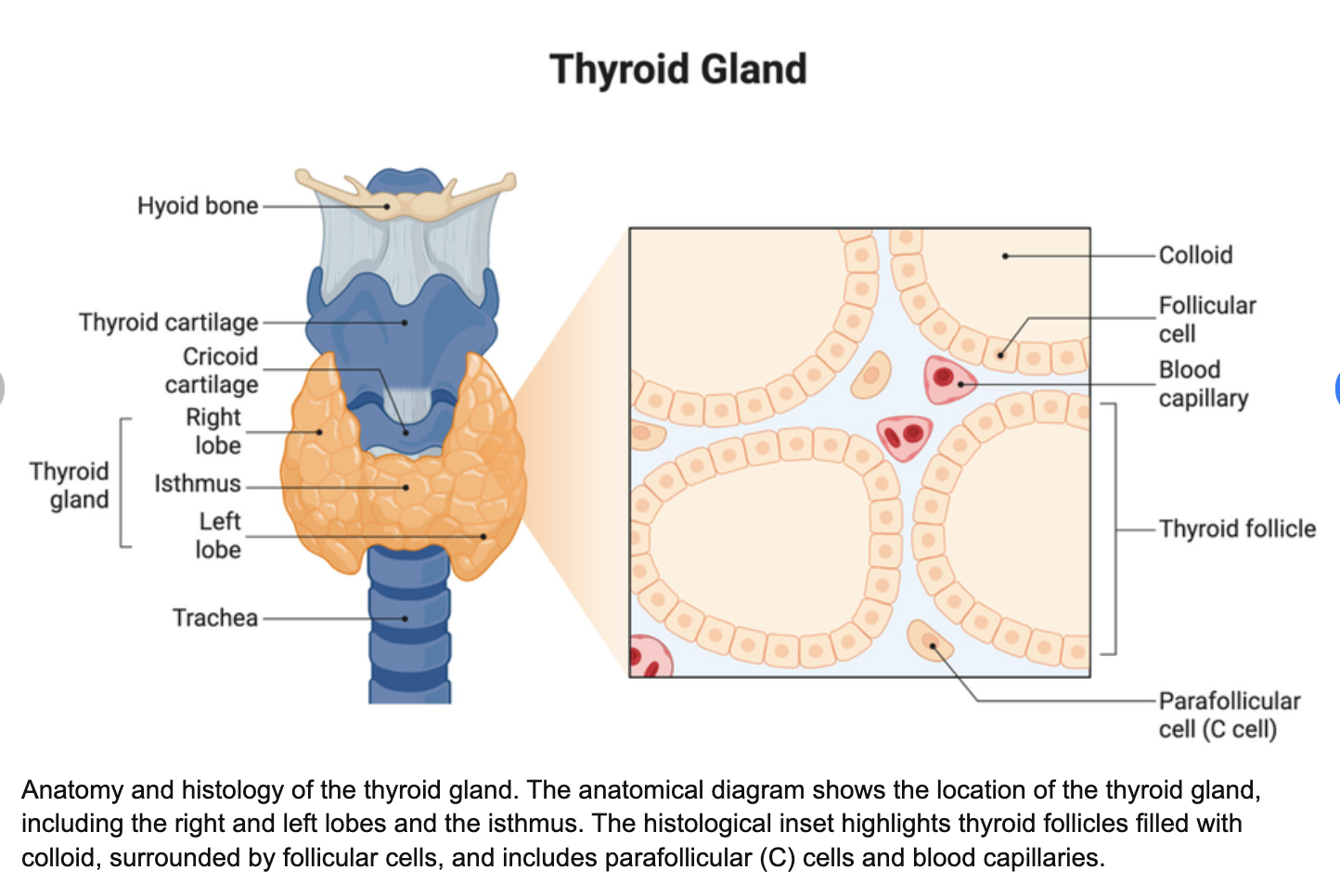
The thyroid is a butterfly-shaped gland located in your neck that acts like the body’s “bossy older sibling” – and for good reason. This small but mighty gland regulates an impressive array of bodily functions:
Understanding how thyroid hormones work is crucial to grasping their connection to kidney health. The system involves three key players:
TSH (Thyroid Stimulating Hormone)
Produced by the pituitary gland, TSH acts as the messenger that tells your thyroid to produce hormones. Think of it as the conductor of the thyroid orchestra.
T4 (Thyroxine)
The main hormone produced by your thyroid, but it’s relatively inactive. T4 is like having the ingredients for a meal but not the finished dish.
T3 (Triiodothyronine)
The active form of thyroid hormone that’s three times more potent than T4. This is what actually gets the job done in your body.
The Conversion Process: T4 must be converted to T3 by an enzyme called deiodinase, which requires several crucial nutrients:
Iodine (the main component)
Selenium
Zinc
Folate
B12
Choline
Vitamin C
Iron
Recognizing Thyroid Dysfunction
Hypothyroidism (Underactive Thyroid) Symptoms:
Unexplained weight gain or difficulty losing weight
Cold intolerance and temperature regulation issues
Chronic fatigue and brain fog
Hair loss, especially thinning of outer eyebrows
Muscle weakness and joint pain
Irregular menstrual periods
Dry skin, particularly on heels
Constipation
High cholesterol and triglycerides
Depression and anxiety
Histamine intolerance
Insomnia
Hyperthyroidism (Overactive Thyroid) Symptoms:
Rapid, unexplained weight loss
Increased heart rate and palpitations
Increased appetite
Diarrhoea or frequent bowel movements
Low calcium levels
Higher body temperature
Anxiety and nervousness
Hair loss
In severe cases, bulging eyes (exophthalmos)
The Crucial Thyroid-Kidney Connection
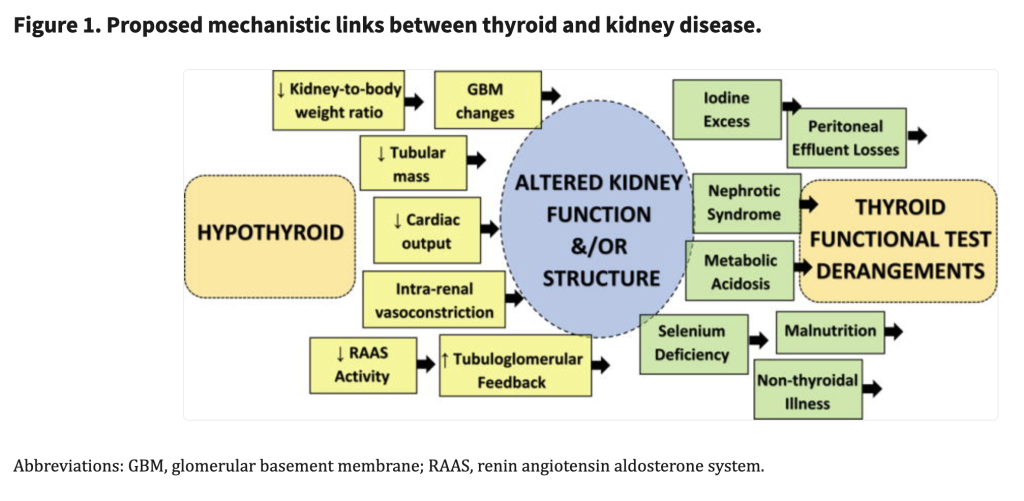
Here’s where things get really interesting – and potentially life-changing for people with kidney disease.
Ischemic Injury: This reduced blood flow creates a slow, oxygen-depriving injury to the kidneys – essentially starving them of the blood flow they desperately need.
Reversible Kidney Damage: Studies show that poorly managed hypothyroidism can reversibly decrease GFR (kidney function) by as much as 40% in more than half of people with the condition.
The Shocking Reality: Kidney Function Can Bounce Back
The most remarkable finding is that this kidney damage is often completely reversible. When thyroid function is optimized, kidney function can return to normal levels. This means that some cases of “chronic kidney disease” might actually be mismanaged thyroid conditions in disguise.
Why Kidney Disease Makes Thyroid Problems Worse
The relationship works both ways. Once kidney disease develops, it creates additional thyroid dysfunction through several mechanisms:
Inflammatory Interference
Reduced kidney function leads to a buildup of inflammatory factors that inhibit the deiodinase enzyme, making it harder to convert T4 to T3. This is why the most common finding in kidney disease patients is:
Normal TSH
Normal T4
Low T3 (the “sad T3” syndrome)
Uremic Toxins
The buildup of toxins in kidney disease doesn’t just make you feel unwell – these toxins actually sit in the thyroid hormone receptor sites, preventing the hormones from working properly. It’s like having the right key but finding someone has put gum in the lock.
Medication Challenges
Most thyroid medications are T4-only (like Synthroid or levothyroxine). But if you have the nutrient deficiencies common in kidney disease, or if inflammation is blocking conversion, these medications won’t help much. You’re essentially giving someone ingredients they can’t use to make the final product.
The Diagnostic Problem: Why This Connection Is Missed
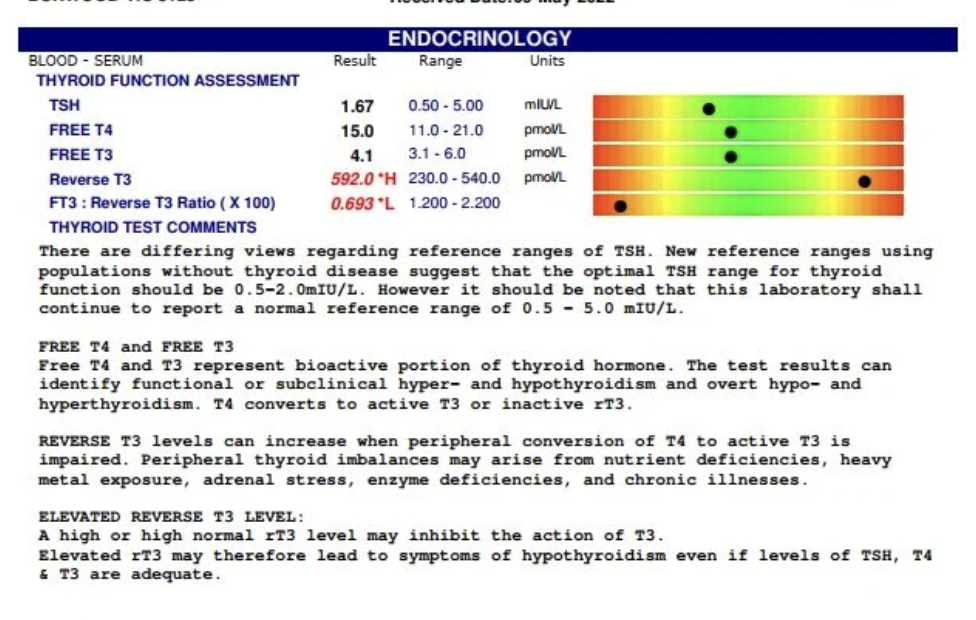
Unfortunately, most doctors only check TSH levels when evaluating thyroid function. This approach misses the complex feedback loops and conversion issues that are crucial in kidney disease. Here’s what should actually be tested:
TSH (optimal range: 0.5-2.5, not the standard 0.45-4.12)
Free T4 (optimal range: 1.0-1.7)
Free T3 (optimal range: 3.0-4.0)
Reverse T3 (should be less than 15)
Thyroid antibodies (if autoimmune disease is suspected)
A Holistic Approach to Thyroid-Kidney Health
Nutritional Support
Ensuring adequate levels of thyroid conversion co-factors:
Iodine and selenium (the big ones)
Zinc, folate, B12, choline, vitamin C, and iron
High-quality protein for proper digestion and reduced uremic toxin production
Medication Considerations
Many people do better on combination T3/T4 medications or natural desiccated thyroid (like Armour thyroid) rather than synthetic T4-only medications, especially when nutrient deficiencies are present.
Addressing Root Causes
Gut Health: Using specific probiotics like Renadyl to break down uremic toxins
Toxin Binding: Supplements like immunoglobulins (Mega IgG2000) to bind inflammatory compounds
Environmental Toxins: Addressing glyphosate and other toxins that can sit in receptor sites
Gluten Sensitivity: Many people with hypothyroidism benefit from gluten-free diets
Stress Management: Chronic stress elevates cortisol, which blunts all hormone receptors
The Detox Connection
Supporting natural detoxification through:
Citrus pectin (PectaSol) for binding toxins
Glutathione and superoxide dismutase support
Proper gut health to reduce internal toxin production
When to Suspect Thyroid-Kidney Connection
This connection should be especially considered when:
You’re seeing declining kidney function without significant protein in the urine
Your kidney function seems to fluctuate
You have unexplained kidney function decline
You have symptoms of hypothyroidism alongside kidney issues
Your kidney disease seems “idiopathic” (unknown cause)
The Three Pillars of Hormone Health
Rather than getting lost in complex hormone testing, focus on these foundational elements:
1. Proper Nourishment
Adequate calories and macronutrients (protein, fats, carbohydrates)
Essential micronutrients and co-factors
No restrictive diet should take priority over proper nourishment
2. Stress Management
Chronic stress elevates cortisol, which suppresses thyroid function and masks hormone imbalances. Effective stress management is non-negotiable for hormone health.
3. Toxin Reduction
Environmental toxins significantly disrupt hormone function. Focus on:
Clean water and air
Organic foods when possible
Reducing exposure to chemicals and heavy metals
Supporting natural detoxification pathways
The Bottom Line: A Paradigm Shift
The connection between thyroid and kidney health represents a fundamental shift in how we should approach kidney disease. Instead of treating these as separate conditions, we need to recognize them as interconnected aspects of metabolic health.
Key takeaways:
Hypothyroidism can cause up to 40% reduction in kidney function – but it’s reversible
Proper thyroid testing goes far beyond just TSH
Many cases of “chronic kidney disease” might actually be undiagnosed thyroid dysfunction
Treatment requires addressing the whole person, not just individual lab values
The combination of proper nutrition, stress management, and toxin reduction forms the foundation of hormone health
Taking Action
If you have kidney disease or declining kidney function:
Request comprehensive thyroid testing including TSH, free T4, free T3, reverse T3, and thyroid antibodies
Work with practitioners who understand the thyroid-kidney connection
Address foundational health through proper nutrition, stress management, and toxin reduction
Consider the bigger picture – your thyroid and kidneys don’t exist in isolation
The thyroid-kidney connection offers hope for many people with declining kidney function. By understanding and addressing this relationship, we can potentially restore kidney health and prevent further decline. It’s time to stop treating symptoms in isolation and start addressing the root causes of chronic disease.
Remember: your body is an interconnected system, and sometimes the solution to one problem lies in an unexpected place. The key is working with healthcare providers who are curious enough to look beyond conventional approaches and explore these vital connections.
This information is for educational purposes and should not replace professional medical advice. Always consult with qualified healthcare providers for personalized treatment plans.
Autoimmune diseases are a group of conditions in which the immune system mistakenly attacks the body’s own tissues. When exploring the connection between autoimmune disease, gut health, and chronic kidney disease (CKD), several key autoimmune conditions are particularly relevant. These include Systemic Lupus Erythematosus, IgA Nephropathy, ANCA-Associated Vasculitis (AAV), Anti-Glomerular Basement Membrane Disease, Sjögren’s Syndrome,…
Chronic kidney disease (CKD) has traditionally been viewed as a disorder of blood pressure, blood sugar and kidney filtration. However, emerging research into the gut–kidney axis suggests that CKD may also be deeply connected to the health of the gut microbiome. Could chronic kidney disease partly be a microbiome-driven condition? According to the Centres for…
Introduction If you’ve been diagnosed with chronic kidney disease (CKD), you’ve likely heard about creatinine, eGFR, and potassium levels. But there’s a crucial enzyme that most doctors and even medical textbooks still aren’t discussing: renalase. Discovered only in 2005, this remarkable protein plays a central role in kidney health, blood pressure regulation, and the body’s…

 By Fiona Chin N.D.