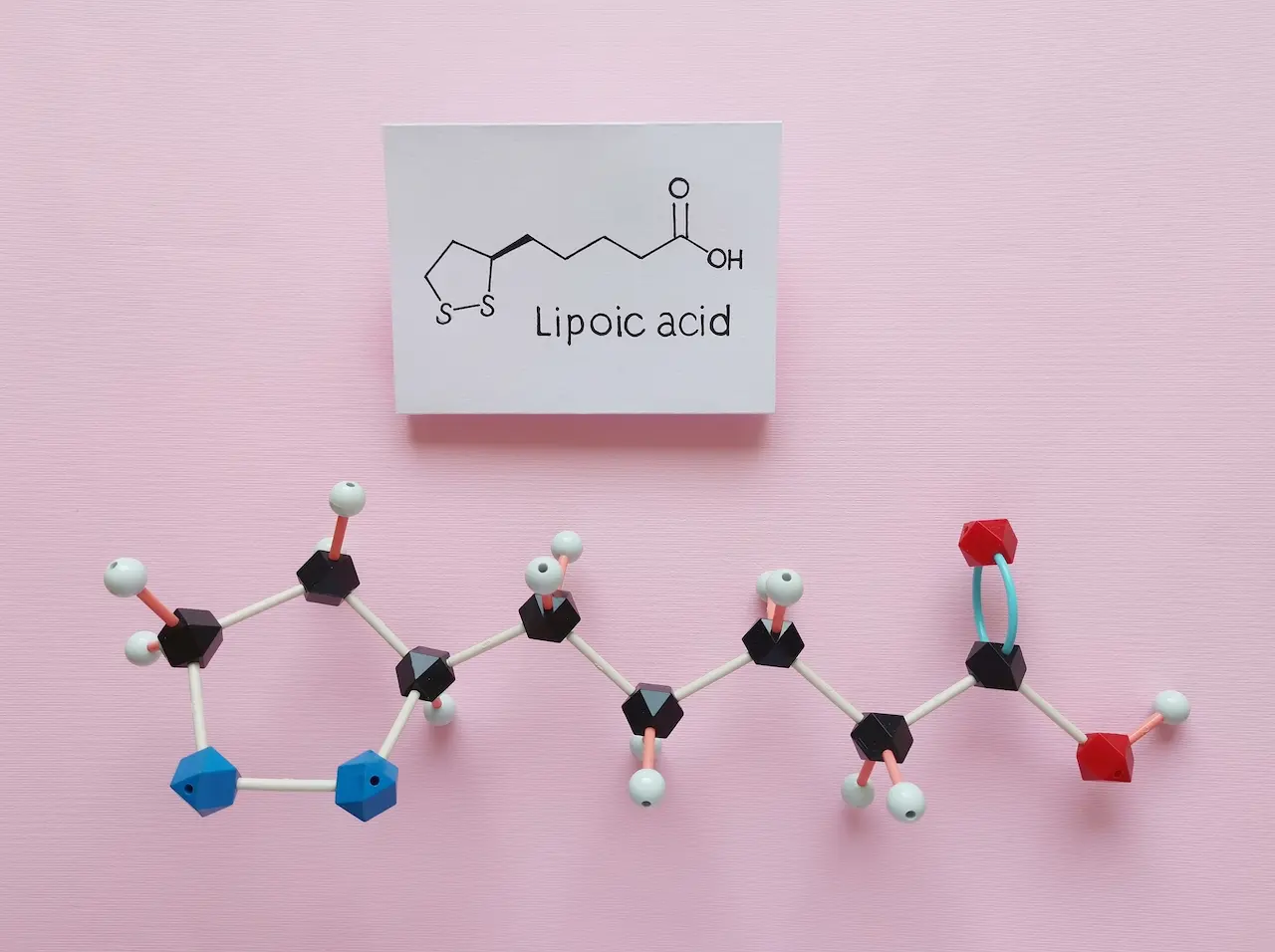
Lipoic Acid, a sulphur-based compound, would have to be one of the most intriguing and unique vitamins known to man. Since its discovery in 1951, lipoic acid (also known as thioctic acid) has been shown to treat diabetes, kidney disease, Alzheimer’s, asthma, heavy metal toxicity, inflammation, insulin resistance, kidney damage, nerve damage, liver damage, heart disease, arthritis, poor memory, stroke, vision problems, renal failure, Parkinson’s disease, and more!
The secret to its staggering ability to treat pretty much “whatever ails ya”, is the ability of this vitamin to be both water soluble and fat soluble, plus, have the ability to ‘renew and recycle’ other antioxidants. You see first of all, vitamins are either water-soluble (e.g. Vitamin B1, B2, B3, B5, B6, B12, and C) or fat-soluble (e.g. Vitamin A, D, E, and K), which limits the vitamins’ effectiveness in certain areas of the body – depending whether it is a water or fat environment. Lipoic acid therefore can cross over wherever the body needs it, including the blood/brain barrier! Secondly, lipoic acid can turn ‘used’ antioxidants (e.g. vitamins E and C) into ‘available’ antioxidants for the body to use again – in other words, giving them a second life.
Lipoic Acid
Here are just a few of its facts:
The only known antioxidant that is both water and fat-soluble
Clinical studies have shown lipoic acid to be kidney-protective
Significantly reduces symptoms of diabetic neuropathy
Improves insulin sensitivity – improves blood sugar control
Increases immune function – by increasing T lymphocyte production
Improves energy production – via the ATP pathways
Supports the elimination of heavy metals – increased chelation (=binding) of heavy metals in the liver
Supports mitochondrial function – the energy powerhouses found mainly within the muscles
Food sources: broccoli, brewer’s yeast, brussels sprouts, rice bran, egg yolk, spinach, potatoes, and animal liver, heart, and kidneys (though requires supplementation for therapeutic effects)
Now before you race off to purchase some, there is just one matter to make sure you have right, and that is making sure you buy the correct type. You see there are three different forms of lipoic acid, and the differences are quite dramatic.
Choice 1 – R-Lipoic Acid: this is the best form because it is the naturally occurring form of lipoic acid
Choice 2 – Alpha Lipoic Acid: this is the second best form because it contains a 50:50 blend of the naturally occurring form (R-Lipoic Acid) and the synthetic form (S-Lipoic Acid)
Choice 3 – S-Lipoic Acid: This is the least effective form, containing only the synthetic variety
So Which One to Buy?
Well, it is always best to get the most natural and most active form – studies have shown that the naturally occurring form is 50% more active – though for treatment purposes I have found the blend still very effective. With quality, of course, comes an increased price, though you need to weigh that up yourself with the benefit of it having more therapeutic value. Again I use both (choice 1 & choice 2). I would avoid straight S-Lipoic Acid, however, even though it still has some therapeutic value. Please check the labels before purchasing, and also note, that the majority of all clinical trials done on lipoic acid have used a 50:50 blend (choice 2).
Dosage
It is always wise when taking any supplementation to consult your health professional beforehand. For example, diabetics on insulin need to be monitored, as lipoic acid can reduce blood sugar levels quickly. Even though this is great, it still needs to be monitored with regular blood glucose checks.
Therapeutic Dosage Range
R-form: 200-600mg a day
Blend: 400-600mg a day
S-form: 400-800mg a day
So in closing, you could say this is the perfect nutrient for those with kidney disease/failure caused by diabetes, cardiovascular problems, immune dysfunction, and heavy metals… which statistically account for the majority of kidney disease sufferers. However, even if your kidney disease is caused by another factor, make sure lipoic acid becomes your new best friend, as the benefits are amazing!
Introduction If you’ve been diagnosed with chronic kidney disease (CKD), you’ve likely heard about creatinine, eGFR, and potassium levels. But there’s a crucial enzyme that most doctors and even medical textbooks still aren’t discussing: renalase. Discovered only in 2005, this remarkable protein plays a central role in kidney health, blood pressure regulation, and the body’s…
Oxytocin is often called the ‘love hormone’ because of its well-known role in childbirth, breastfeeding, and emotional bonding. But emerging research reveals this remarkable hormone does far more than foster maternal connection. Scientists are now discovering that oxytocin plays a crucial role in kidney function and may offer significant protective benefits for people with chronic…
The Urgency of Kidney Health Chronic kidney disease (CKD) is one of the fastest-growing health concerns worldwide, affecting an estimated 10% of the population. The kidneys are essential for maintaining fluid balance, regulating blood pressure, detoxifying the body, and producing hormones. Once kidney function declines, recovery is difficult and often limited. Prevention, early support, and…

 By Duncan Capicchiano ND