Chronic kidney disease (CKD) is a chronic health concern characterised by the gradual loss of kidney function over a period of time. Our kidneys play a vital role in filtering waste and excess fluids from the blood; they balance electrolytes and regulate blood pressure. When the function is compromised, severe health conditions can be ensured; these include cardiovascular disease, anaemia, bone disorders, and eventually, kidney failure requiring dialysis or kidney transplantation.
CKD affects approximately 850 million people worldwide, people of every age and race are affected, those from disadvantaged populations are at higher risk. In the United States alone, it is estimated that 37 million people remain undiagnosed due to its often silent progression in the early stages. CKD impacts those with diabetes, hypertension and marginalised populations with limited healthcare.
New global kidney health report sheds light on current capacity around the world to deliver kidney care – International Society of Nephrology
Here at Kidney Coach, we talk a lot about how diet can help slow the progression of KD. I will explain some of the reasons why we suggest avoiding dairy.
#1 Acid/Alkaline Diet
Source How To Start An Alkaline Diet | Health & Nutrition | The Black Purple – TheBlackPurple
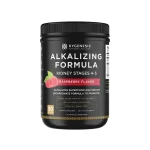
KD is a hard one to box into one diet and we certainly do not suggest a ‘one size fits all’ approach, however we do like to take any unnecessary load off the kidneys. One way we can take the load off is through an alkaline diet. The one common denominator in KD is acidity. All dairy (with exception of unsalted butter, raw goat milk and unpasteurised, organic milk), is considered to be acidic. Acidosis is described as a disturbance of the acid-alkaline balance in the body (pH). This shift in pH creates an accumulation of excess acids in the tissues and the bloodstream. Alkaline diets have been seen to be beneficial in conditions such as;
- Diabetes
- Hypertension
- Cardiovascular damage
- Weight gain
- Obesity
- Bladder conditions
- Kidney stones
- Immune deficiency
- Free radical damage
- Hormonal issues
- Premature aging
- Gout
- Joint pain
- Osteoporosis
- Headaches
- Low energy
And kidney disease!

To restore health, the diet needs to consist of 75% alkaline-forming foods compared to 25% acid-forming foods. To maintain health, your diet will need to consist of 60% alkaline-forming foods to 25% acid-forming foods.
The kidneys are one of the primary organs responsible for maintain optimal pH in the body, however, their functioning is also highly dependent on the body’s acid: alkaline balance. Metabolic acidosis is associated with a faster deterioration in kidney function, and the degree of metabolic acidosis is associated with glomerular filtration rate (GFR). So this means the more acidic your body is, the worse your kidney function is likely to be. The higher the acid level in the blood and urine, the harder the kidneys will need to work. A reduction in kidney function will mean the kidneys can no longer excrete acids and keep urinary pH at an alkaline level as it should for healthy kidney function. Higher acidity leads to a reduced ability of the kidneys to function correctly.
The cycle continues.
It is also important to note that just because a food tastes acidic, it does not necessarily mean it has an acidic effect on the body. It is essential to look at the impact of the food on the body once the food has been ingested.
A simple way to begin following an alkaline diet is to;
- Eliminate dairy
- Eat more vegetables. Almost all vegetables are considered alkaline. Vegetables should make up 50% of your daily food intake.
- Switch red meat for plant-based protein such as tempeh.
- Avoid all alcohol.
- Avoid all fizzy drinks.
- Reduce excess refined carbohydrates, such as bread and pasta.
#2 High Phosphorus Content in Dairy
Dairy products such as milk, cheese and yoghurt contain phosphorus, which can accumulate in the blood once kidney function starts to decline. When your kidneys are healthy, they have the ability to regulate healthy phosphorus levels, in CKD, this ability reduces. Phosphorus is found in many foods and is essential for forming bones and teeth. It helps the body utilise protein for growth, maintenance and repair of cells and tissue. When kidney function is reduced, you may be advised to limit foods such as dairy to control how much phosphorus enters the bloodstream.
High phosphorus in the blood can lead to the following;
- Vascular calcification (Hardening of arteries)
- It can cause calcium to be pulled from the bones, leading to weakened bones and an increased risk in fractures.
- When phosphorus levels are high, it causes the body to break down bone, making it harder to rebuild; this is called bone mineral disease (BMD)
- An increased risk of cardiovascular disease
An important part in treating KD is monitoring phosphorus levels, therefore, if your kidneys are not functioning properly and you are not on dialysis, your kidneys may struggle to deal with phosphorus. Medications are available, such as phosphate binders; they carry phosphorus out of the body instead of letting it build up in the bloodstream. In addition to taking phosphate binders and maintaining a low-phosphorus diet, you can maintain healthy levels with the following;
- Exercise
- Vitamin D supplementation
- Dialysis
- Keeping calcium levels within range
High Phosphorus (Hyperphosphatemia) | National Kidney Foundation
Capicchiano. D & Chin. F, The Kidney Disease Solution, Empowered Health Solutions, 2009-2020

#3 Dairy & Inflammation
Traditionally, in naturopathic medicine, we see dairy as an inflammatory food. Often, it is eliminated from the diet to take some of the inflammatory load off the body and give the digestive system a break. There is conflicting evidence in this area of research, and the subject can be contentious. However, from a traditional medicine standpoint, dairy has the potential to trigger an immune response and can exacerbate chronic conditions in certain individuals.
Consuming fruits and vegetables and certain foods are known to reduce inflammation, while foods such as meat, processed foods, sweets and fried foods are known causes of inflammation. Some studies suggest dairy causes inflammation, whilst others don’t.
Full-fat milk and dairy products contain saturated fats, which may increase inflammation that is already present, as it increases the absorption of lipopolysaccharides. Saturated fats should be limited in the diet as they pose a risk for cardiovascular health, closely related to kidney health.
Is Dairy Inflammatory?
#4 Dairy & Somatic Cells

Image via Somatic cell counts – Using the magic 200,000 cells/ml cut-point to diagnose subclinical mastitis – Progressive Dairy | Ag Proud
Somatic cells are naturally found in milk as part of a cow’s response to mastitis. The somatic cell count (SCC), significantly increases as white blood cells fight off the infection. Concerns are often raised about the welfare of cows and milk quality, particularly when it is large scale industrial operations. Producing high-quality milk is the most important requirement for maintaining a profitable dairy industry.
Milk somatic cell count (SCC), refers to the concentration or density of somatic cells found in milk. This is a standard practice to measure the physiological health of the dairy cows, milk quality and safety. It monitors the udder health of dairy cows, ensuring the quality and yield of milk. Milk somatic cells are primarily leucocytes, and some epithelial cells shed from the lining of the mammary gland. In infected udder, changes occur in milk due to altered membrane permeability, altered blood flow to the udder and changes in the filtering capacity. Higher SCC in milk is associated with low keeping quality, fat and casein content and higher bacterial counts.
Milk somatic cell count: From conventional microscope method to new biosensor-based method – ScienceDirect
Intensive farming practices, including overmilking and unsanitary conditions, can lead to a higher incidence of mastitis. Cows treated for mastitis are usually given antibiotics.
The SCC is quantified as the number of cells per ml of milk. In general terms:
- An individual cow SCC of 100,000 or less indicates an ‘uninfected’ cow, where there are no significant production losses due to subclinical mastitis
- A threshold SCC of 200,000 would determine whether a cow is infected with mastitis. Cows with a result of greater than 200,000 are highly likely to be infected in at least one quarter.
- Cows infected with significant pathogens have an SCC of 300,000 or greater
SCC taken from the bulk tank describes the average heard count, meaning this information does not define the spread or degree of SCC variation within a herd. Only individually testing cows will better indicate whether there are a significant number of cows with slightly higher-than-average counts or a small number of cows with very large counts.
Somatic Cell Count, an indicator of milk quality | AHDB
Impact on Public Health
A higher SCC in milk is associated with a human health hazard. Pathogens such as Staphylococci spp. may even be an issue in pasteurised milk, as these endotoxins are thermal stable. Other potential pathogens E. coli, Campylobacter jejuni, Yersinia enterocolitica, Listeria monocytogenes, Salmonella spp. and Clostridium spp. may cause food poisoning.
Another health concern associated with a high SCC is the increased use of antibiotics in order to lower SCC and clinical mastitis cases in the herd. The widespread use of antibiotics as a prophylactic may cause antibiotic residues in our food chain. In addition, by inhibiting microbial growth, antibiotics can alter the characteristics of cultured dairy products.
04-6938__B._Brahma__REVIW_PAPER.pdf
So, for a few reasons, we suggest the elimination of dairy from the diet of those with CKD. Anything that will reduce the load off the kidneys and sway the body into a more alkaline state is going to support long-term kidney health.
As always, please talk to your healthcare provider before making significant changes to your diet.
Let us know your thoughts by heading to our Facebook page.
I hope you found this helpful information 😊

 By Libby Shaw