Receiving a diagnosis of a chronic illness can feel like the moment your entire world changes.
One conversation. One phone call. One scan or blood test. In an instant, the future you had imagined can feel uncertain, and life becomes divided into two chapters: before the diagnosis and after it.
The emotional impact of chronic illness extends far beyond the physical symptoms. It challenges your identity, your relationships, your priorities, and your understanding of what it means to be healthy. While no one would ever choose illness, many people eventually discover that the experience becomes one of the greatest catalysts for personal growth they have ever known.
This doesn’t mean the illness is a gift, nor does it diminish the pain, grief, or uncertainty that accompanies it. Rather, it acknowledges a remarkable truth supported by psychology: adversity has the potential to transform us.
The journey through chronic illness isn’t simply about recovering your health. It can become a journey of remembering who you truly are beneath the expectations, responsibilities, and identities you’ve carried for years.
When Illness Gives You Permission
One of the most unexpected experiences many people describe after receiving a diagnosis is an overwhelming sense of permission.
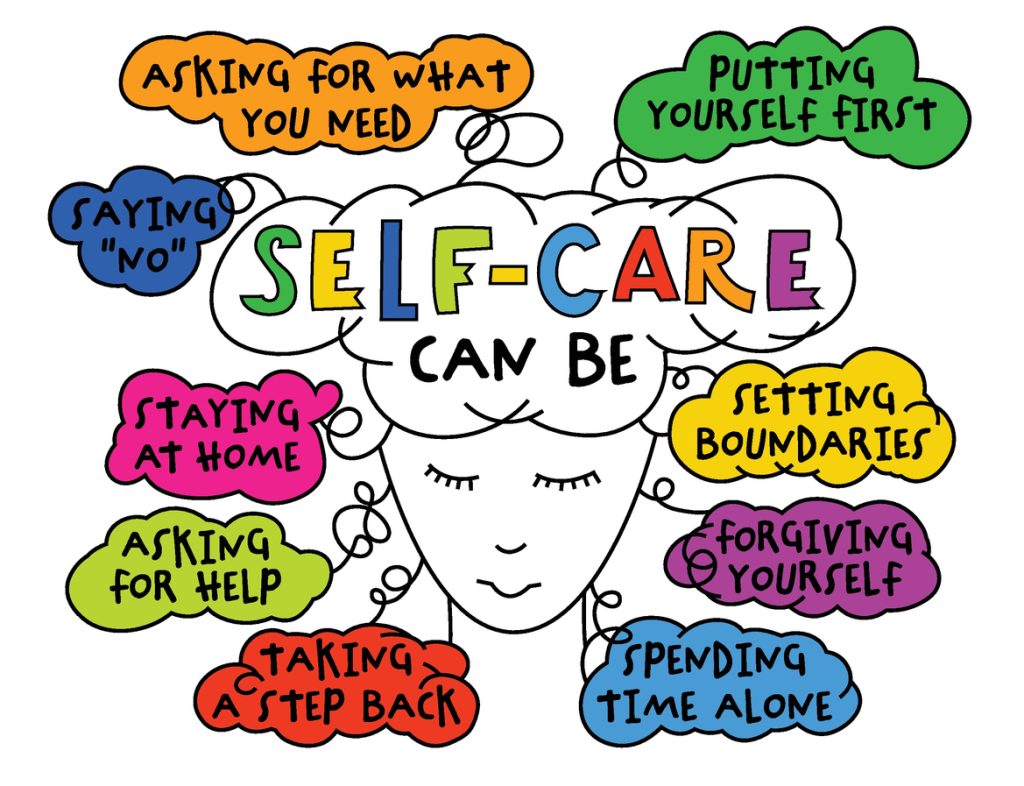
Permission to finally slow down.
Permission to say “no” without guilt.
Permission to stop carrying everyone else’s emotional burdens.
Permission to acknowledge that constantly putting yourself last is no longer sustainable.
For years, many people unknowingly operate from the belief that their value comes from what they do for others. They become the caregiver, the achiever, the perfectionist, or the person everyone relies upon. Their own needs quietly disappear beneath endless responsibilities.
A chronic illness often interrupts this pattern.
Suddenly, your body demands attention. Rest is no longer optional. Boundaries become essential rather than selfish. You begin to realise that continually pouring from an empty cup ultimately serves no one, not yourself and not those you love.
Many people living with chronic illness later reflect that they finally learned how to care for themselves because their illness left them with no alternative.
Sometimes the body says what the mind has been unwilling to hear.
The Psychological Earthquake of a Diagnosis
A diagnosis doesn’t simply affect the body; it often shakes the very foundation of your identity.
Psychologists describe this as a “psychological earthquake.” Everything you believed about yourself and your future is suddenly called into question.
You may find yourself asking:
- Will I ever be the same again?
- What does my future look like now?
- Can I still achieve my dreams?
- How will this affect my family?
- Why did this happen to me?
These questions are completely normal.
The early stages of illness are often characterised by uncertainty, fear, grief, anger and overwhelm. The nervous system shifts into survival mode as it attempts to make sense of an unfamiliar reality.
If you have responsibilities such as children, a career or caring for others, this emotional burden can feel even heavier. You’re expected to continue functioning while simultaneously processing one of the most significant life events you’ve ever experienced.
This stage can feel incredibly isolating.
But you are far from alone.
Understanding Post-Traumatic Growth
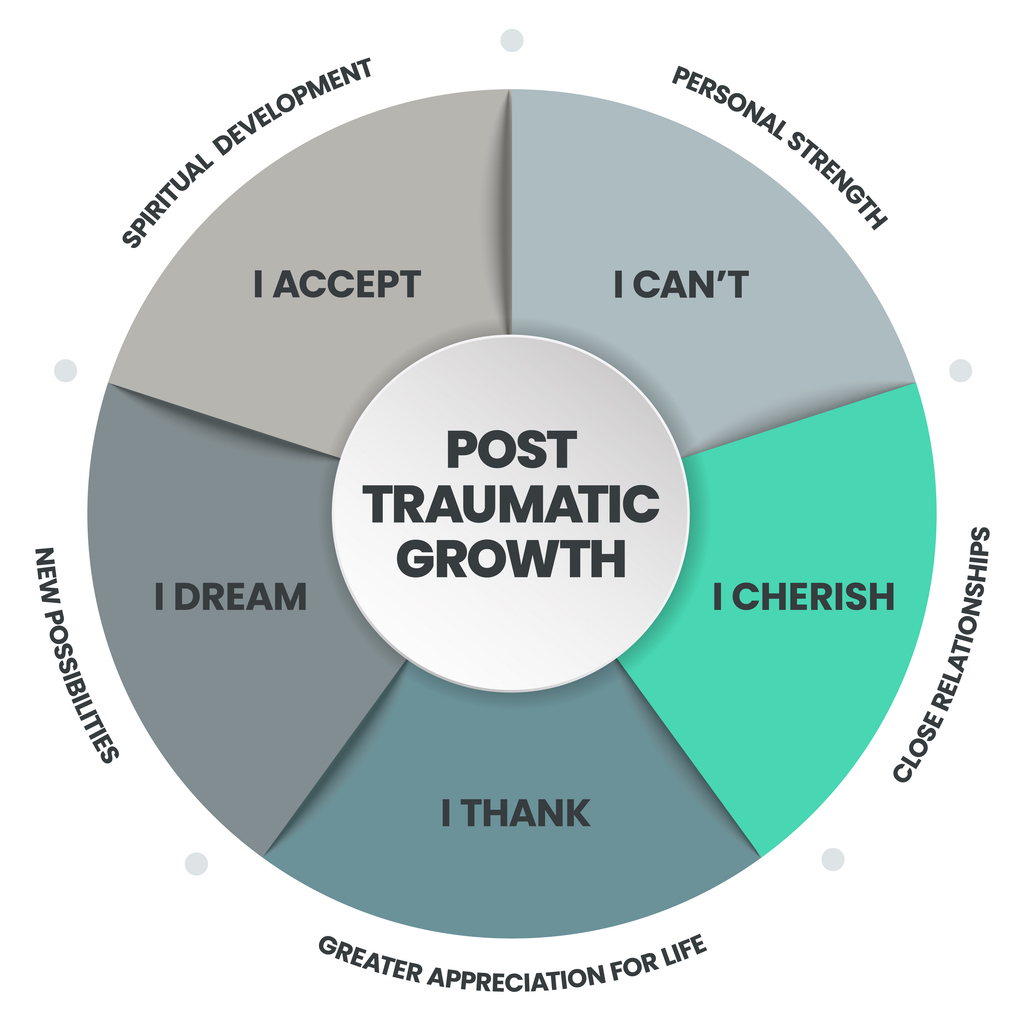
While much attention has been given to the psychological effects of trauma, researchers have also identified something remarkable that can emerge from adversity: Post-Traumatic Growth (PTG).
Developed by psychologists Richard Tedeschi and Lawrence Calhoun in the 1990s, Post-Traumatic Growth describes the positive psychological transformation that can occur after someone experiences significant life challenges.
Unlike resilience, which involves returning to your previous level of functioning, PTG describes growing beyond it.
In other words, life doesn’t simply go back to how it was before.
It becomes different.
Often, it becomes richer.
Research has consistently shown that many people living with chronic illness eventually experience positive changes, including:
- A greater appreciation for life
- Stronger and more authentic relationships
- Increased emotional resilience
- Greater personal strength
- A deeper sense of meaning and purpose
- Spiritual growth
- Improved self-awareness
This transformation doesn’t happen because illness is enjoyable.
It happens because hardship forces us to examine the assumptions we’ve carried throughout our lives.
When life strips away certainty, we begin asking questions we may never have considered before.
Who am I?
What truly matters?
What kind of life do I want to create from here?
These questions often become the beginning of profound personal transformation.
The Predictable Journey Most People Experience
Although every person’s journey is unique, many individuals move through a surprisingly similar emotional pattern after a major diagnosis.
Stage One: Crisis
The diagnosis arrives.
Fear dominates.
Life feels as though it has stopped overnight.
Medical appointments, investigations, treatment decisions and uncertainty become your new reality.
Stage Two: The Journey
As time passes, routines begin to develop.
You learn about your condition.
You begin making lifestyle changes.
You seek answers.
You start asking deeper questions, not just about your illness, but about yourself.
This stage often becomes the beginning of genuine self-discovery.
Stage Three: Relief
Perhaps your treatment begins working.
Maybe your kidney function stabilises.
Perhaps you receive a transplant or encouraging test results.
Gratitude becomes overwhelming.
Everything feels precious.
Many people promise themselves:
“I’m never going back to living the way I used to.”
Stage Four: Returning to Life
Eventually, normal life resumes.
Work returns.
Responsibilities increase.
Daily routines slowly replace the heightened awareness that existed during the crisis.
The urgency begins to fade.
Stage Five: Old Patterns Reappear
This stage often surprises people.
As life becomes busy again, many of the habits, stresses and behaviours that existed before the diagnosis quietly return.
This isn’t failure.
It’s human nature.
Understanding this cycle helps explain why personal growth requires ongoing awareness rather than a single life-changing event.
What Is Your Illness Asking You to Remember?
One question has become central to many psychological and spiritual approaches to healing:
What is this experience asking me to remember?
Notice the question isn’t:
“Why is this happening to me?”
Instead, it asks:
“What is this inviting me to become?”
Perhaps your illness is inviting you to remember:
- That your worth isn’t determined by productivity.
- That your body deserves to be listened to rather than ignored.
- That boundaries are an act of self-respect.
- That rest is productive.
- That joy is not something to postpone until you’re healthy.
- That relationships matter more than achievements.
- That your identity is far greater than any diagnosis.
For many people, illness becomes less about returning to who they were and more about becoming someone they had forgotten they could be.
Rebuilding Your Identity
One of the greatest challenges following a diagnosis is identity reconstruction.
Before illness, many people define themselves by their careers, fitness, independence, or caring for others.
When illness changes these roles, identity can become fragmented.
The question becomes:
“Who am I now?”
Healthy healing isn’t about pretending the illness doesn’t exist.
Nor is it allowing the illness to become your entire identity.
Instead, it involves integrating the experience into a broader sense of self.
You are not your kidney disease.
You are not your autoimmune disease.
You are not your cancer.
You are not your diagnosis.
You are a person experiencing an illness.
That distinction matters.
When illness becomes our entire identity, it can unconsciously limit recovery and personal growth.
When it becomes one chapter within a much larger story, healing becomes possible.
Social media has transformed the experience of living with chronic illness.
For many people, it offers:
- Community
- Validation
- Education
- Hope
- Support
- Reduced isolation
These are incredibly valuable.
However, there is also a quieter risk.
Sometimes, the online identity built around illness becomes difficult to let go of.
Healthy sharing tends to evolve over time.
People educate.
They inspire.
They connect.
As healing progresses, their story grows beyond the illness itself.
Unhealthy sharing can look different.
The diagnosis becomes the primary source of identity.
External validation becomes emotionally reinforcing.
Recovery may even begin to feel threatening because it risks changing the identity or community that has formed around being unwell.
There is nothing wrong with sharing your story.
Stories heal.
Stories connect.
The key is ensuring that your diagnosis remains part of your life, not the entirety of it.
What Healing Really Looks Like
Many people imagine healing as a peaceful journey filled with meditation, journaling, and self-discovery.
Sometimes it is.
More often than not, healing is beautifully messy.
Healing might look like:
- Crying unexpectedly months after your diagnosis.
- Feeling angry when others don’t understand.
- Asking for help for the first time.
- Setting boundaries that make others uncomfortable.
- Choosing rest instead of productivity.
- Learning to trust your body again.
- Letting go of perfectionism.
- Feeling hope one day and fear the next.
Healing is rarely linear.
Progress often feels like two steps forward and one step back.
That doesn’t mean you’re failing.
It means you’re human.
Over time, healing becomes less about eliminating every difficult emotion and more about increasing your capacity to move through those emotions without becoming consumed by them.
True healing is built through hundreds of small moments of self-trust.
Choosing nourishing food.
Attending appointments.
Saying no.
Asking for support.
Listening to your body.
Practising self-compassion.
These seemingly ordinary actions gradually become extraordinary acts of transformation.
Finding Meaning Beyond the Diagnosis
One of the strongest predictors of long-term adaptation to chronic illness isn’t simply symptom improvement.
Its meaning.
Research consistently demonstrates that people who are able to create meaning from adversity often experience better psychological wellbeing and improved long-term self-management.
Meaning doesn’t mean believing your illness happened “for a reason.”
Rather, it means asking:
How can I allow this experience to shape me into someone wiser, kinder and more authentic?
Sometimes, meaning is discovered through helping others.
Sometimes through advocacy.
Sometimes, through reconnecting with family.
Sometimes through spirituality.
Sometimes simply through learning to appreciate ordinary moments that were once overlooked.
Whatever form it takes, meaning helps transform suffering into something that no longer feels entirely empty.
A New Definition of Health
Perhaps the greatest lesson chronic illness teaches us is that health is about far more than the absence of disease.
I’ve met people living with chronic illnesses who possess extraordinary vitality, emotional resilience, meaningful relationships and a deep sense of purpose.
I’ve also met people with no diagnosed disease who are exhausted, disconnected, chronically stressed and profoundly unhappy.
Health is not merely what appears on a pathology report.
True health includes:
- Emotional wellbeing
- Nervous system regulation
- Meaningful relationships
- Purpose
- Joy
- Resilience
- Hope
- Connection
A diagnosis may change your body.
It does not have to diminish your capacity to experience a deeply fulfilling life.
Final Thoughts
The journey through chronic illness is rarely one anyone would choose.
It is unpredictable.
It is painful.
It is often deeply unfair.
Yet for many people, it also becomes the beginning of a life lived with greater intention, authenticity and appreciation than ever before.
Post-Traumatic Growth reminds us that while trauma changes us, it does not have to define us.
The people who navigate chronic illness most successfully are often those who become curious rather than defeated, those willing to ask difficult questions, examine old patterns and slowly build a life aligned with who they truly are.
Healing is not about becoming the person you were before your diagnosis.
It is about becoming someone who has integrated the experience with wisdom, compassion and strength.
Everyone’s journey is different.
Everyone heals at their own pace.
There is no correct timeline, no perfect response and no single definition of recovery.
But perhaps the greatest invitation illness offers is this:
Not to become someone new.
But to remember who you have always been.

 By Libby Shaw