What the trials actually show, where the argument is still live, and what I see in clinic
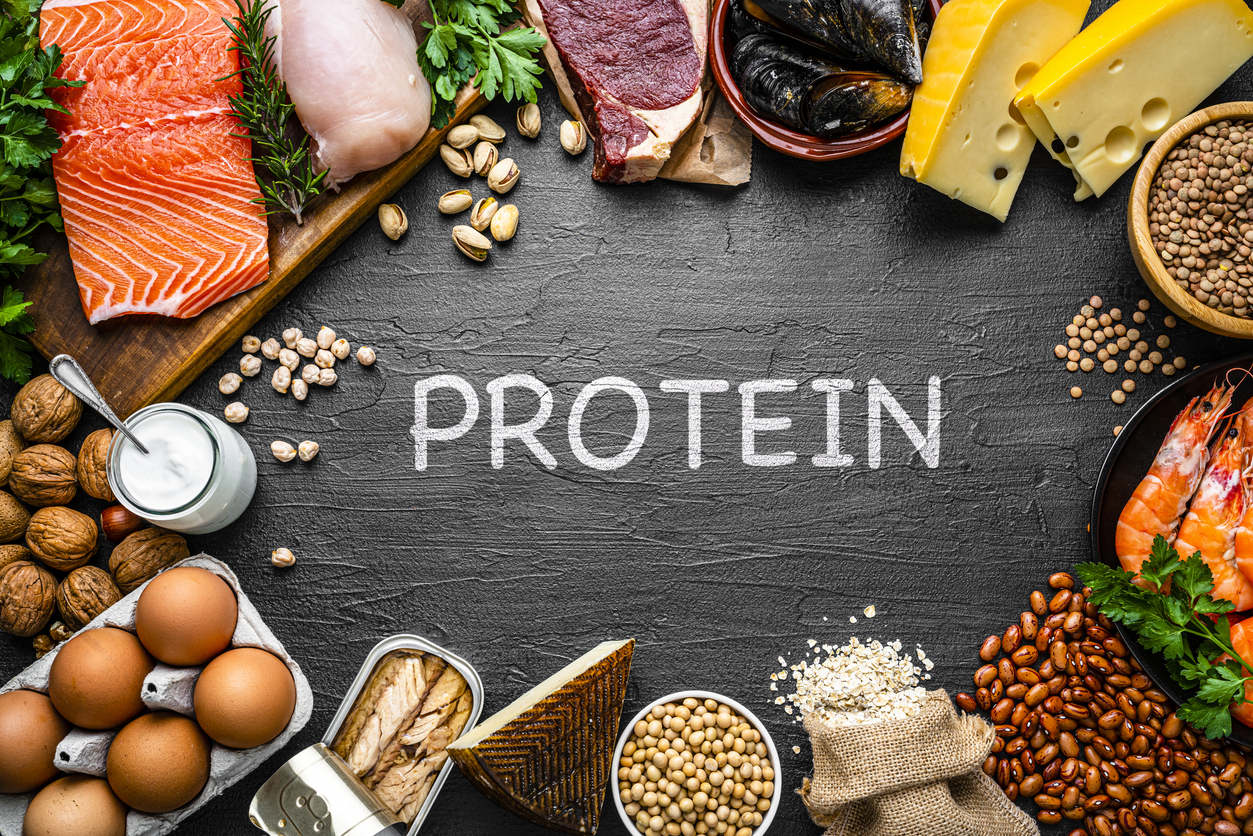
For fifty years, one of the first things a person with chronic kidney disease was told at diagnosis was to cut back on protein. It became so routine that most people never questioned it. Eat less protein, spare the kidneys, delay dialysis.
The physiology behind that advice is sound, and I want to be fair to it before I take it apart. But when you go back and read the trials it rests on – properly, including the ones that didn’t work – the picture is messier than the advice implies. And a lot of what we blamed on protein may have been caused by something else.
I want to be upfront about something before we start: this case is not closed. There is an active, sometimes sharp argument running in the nephrology journals right now, and both sides have real points. I’m going to show you both, tell you which arguments I think hold up, and be clear about where I’m going on clinical experience rather than settled evidence.
Where the advice came from
Your kidneys are filters. Each one holds around a million nephrons, and each nephron starts with a glomerulus; a tiny knot of capillaries that lets water and small molecules through while holding back blood cells and most protein.
When you eat protein, your body produces nitrogen waste, chiefly urea. The kidney responds by filtering harder: the afferent arteriole widens, blood flow rises, and pressure inside the glomerulus goes up. This is called hyperfiltration, and in a healthy kidney it is a normal, reversible adaptation. There is no good evidence that high-protein meals damage healthy kidneys.
The concern is different once nephrons have already been lost. The survivors are working harder and running at higher pressure. Add a large protein load on top, the theory goes, and you accelerate the damage.
That logic made its way into guidelines. KDIGO’s 2020 nutrition guideline recommends 0.55–0.60 g/kg/day for metabolically stable adults with CKD stages 3–5, or 0.28–0.43 g/kg/day with keto acid analogues, and 0.6–0.8 g/kg/day for those with diabetes. KDIGO’s 2024 guideline is more relaxed: around 0.8 g/kg/day, with the emphasis on avoiding intakes above 1.3 g/kg/day in people at risk of progression.
So far, so plausible. But a plausible mechanism is not the same thing as a proven benefit.
What the trials actually found
The largest and most influential trial was MDRD (Modification of Diet in Renal Disease, 1994), enrolling 840 patients across two comparisons. In moderate CKD, roughly 0.6 g/kg/day did not slow kidney function loss significantly more than about 1.3 g/kg/day. In more advanced disease, going down to roughly 0.3 g/kg/day plus supplements did not clearly beat 0.6.
The best synthesis we have is the 2020 Cochrane review by Hahn, Hodson and Fouque – 17 trials, 2,996 adults with non-diabetic CKD stage 3 or above, followed 12 to 50 months. It splits cleanly in two:
● Low protein (0.5–0.6 g/kg/day) versus normal (≥0.8): essentially no difference in reaching end-stage kidney disease (RR 1.05, 95% CI 0.73–1.53), rated only low certainty. Effect on GFR, very low certainty. Mostly stage 3a and 3b patients.
● Very low protein (0.3–0.4 g/kg/day) versus low or normal: fewer people reached dialysis (RR 0.65, 95% CI 0.49–0.85), moderate certainty. No difference in death (RR 1.26, 95% CI 0.62–2.54). Effect on GFR again, very low certainty. Stage 4 and 5 patients, usually with keto acid supplementation.
The only reasonably solid signal sits at the far end of the disease, using the most aggressive restriction most people cannot sustain. The moderate restriction routinely given at stage 3 has never shown benefit on hard outcomes.
For diabetic kidney disease, the picture is thinner. A separate 2023 Cochrane review concluded protein restriction has uncertain effects on kidney function over time and probably makes little difference to death or kidney failure.
Then the finding that should give everyone pause. In long-term observational follow-up of MDRD, patients originally assigned to the very-low-protein arm had a higher risk of death — 38.9% versus 23% (hazard ratio 1.92). That is follow-up data years after the intervention ended, and it does not prove the diet caused those deaths. But it makes it hard to keep treating severe restriction as harmless.
The red meat study everyone quotes
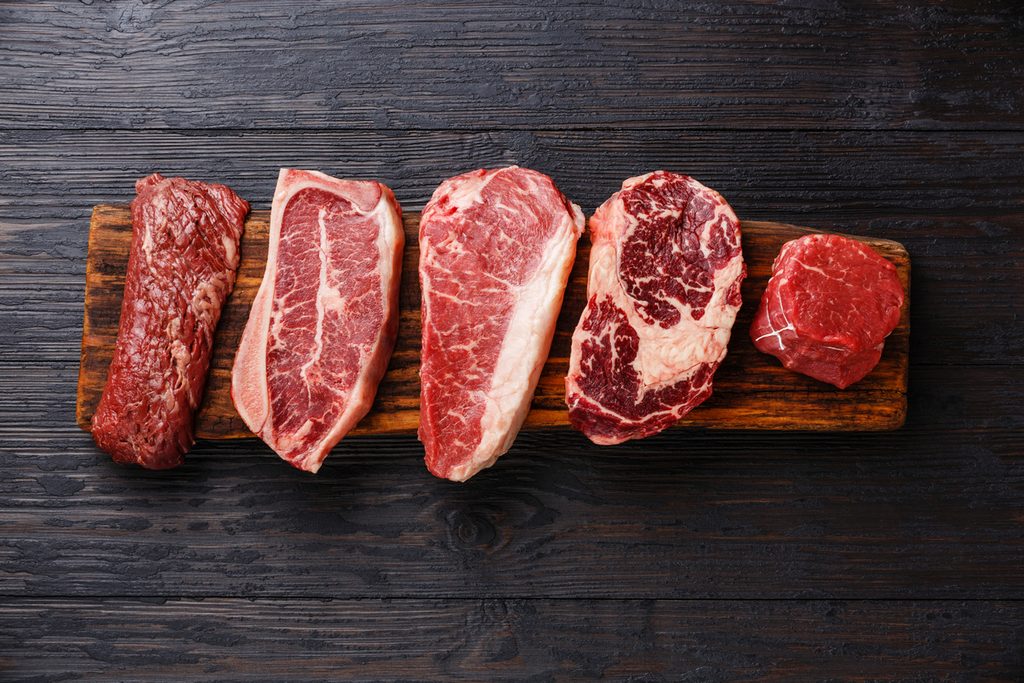
Lin, Hu and Curhan (2010), from the Nurses’ Health Study, reported that two or more servings of red meat per week was associated with microalbuminuria (OR 1.51, 95% CI 1.01–2.26), along with higher animal fat intake (OR 1.72).
What that study can and cannot tell you:
● It is observational. Association, not causation.
● Diet was self-reported via food frequency questionnaires in 1984, 1986, 1990, 1994 and 1998, averaged over fourteen years.
● The outcome was microalbuminuria measured once, in 2000 — a marker in women with largely well-preserved kidney function. Not progression, not dialysis.
● No head-to-head comparison of protein sources or protein levels. Red meat was one exposure among many nutrients tested.
● The confidence interval starts at 1.01. A whisker from no effect.
● Female, largely white, American nurses.
That makes it hypothesis-generating, which is what its authors said. It became something much larger in the retelling.
The stronger observational study is Lew and colleagues (2017), Singapore Chinese Health Study: 63,257 adults, 951 cases of end-stage kidney disease over a mean 15.5 years, with ESRD captured through a national registry rather than self-report. Red meat was associated with ESRD risk; poultry, fish, eggs and dairy were not. Swapping one serving of red meat for another protein source was associated with up to a 62% lower relative risk.
Because if protein per se were the problem, poultry, fish and eggs should have behaved like red meat. They didn’t.
The variable I think we were actually measuring
What distinguishes red meat from the protein sources that showed no signal is not the protein. It is what the food leaves behind after metabolism: sulphate, phosphate, and a net acid load.
● Banerjee and colleagues (2015), NHANES III, median 14.2 years of follow-up in 1,486 adults with CKD: the highest tertile of dietary acid load carried a relative hazard for ESRD of 3.04 (95% CI 1.58–5.86) against the lowest, after adjustment. The association strengthened as eGFR fell.
● Goraya and Wesson randomised patients to added base-producing fruit and vegetables versus oral sodium bicarbonate. In stage 4 hypertensive CKD, one year of either, dosed to halve dietary acid, improved acidosis and reduced urinary markers of kidney injury, with comparable kidney function. Their five-year stage 3 work found fruit and vegetables matched bicarbonate on plasma total CO₂ and did better on overall health scores and cardiovascular events.
Every low-protein diet ever trialled also, unavoidably, lowered dietary acid load. We have been running a confounded experiment for fifty years.
I’ll be honest about the limits. The fruit-and-vegetable trials are small and single-centre.
Taking the rebuttal seriously
In early 2025, three nephrologists – Bawazir, Topf and Hiremath – published a paper in the Brazilian Journal of Nephrology arguing that protein restriction is an outdated strategy. Denise Mafra and Denis Fouque wrote a rebuttal. Fouque is a co-author of the very Cochrane review I’ve been quoting, and one of the most serious people in renal nutrition in the world. When he says the sceptics have overreached, that deserves a proper hearing, not a dismissal.
Here is what they argued, and how well I think each argument holds.
“MDRD was flawed – too short, and patients were enrolled before reaching a three-month steady state.”
Partly fair. When you drop protein intake, GFR falls briefly for haemodynamic reasons – reduced filtration pressure, not lost nephrons. In a short trial, that early dip eats into the measured slope and can mask a genuine long-term benefit. MDRD did show a faster initial decline than a slower subsequent slope in the low-protein arm. It’s a legitimate criticism. It doesn’t rescue the primary result, but it means “MDRD was negative” is a blunter statement than it sounds.
“The trials were leaky – patients didn’t eat what they were assigned.”
Their strongest argument, and I think it’s largely right. Barsotti and colleagues pointed out that in the Locatelli trial, the low-protein group ate significantly more protein than prescribed. The same problem sinks the Hansen diabetic nephropathy trial: the low-protein arm reached 0.89 g/kg/day instead of the assigned 0.6, while the comparison group averaged 1.0 – a real-world gap of about 0.1 g/kg. If the two diets never separated, a null result tells you almost nothing about the diet. It tells you about adherence. This is the single most important caveat in the whole negative literature, and the sceptics have not answered it well.
“Hansen actually showed a benefit that the sceptics glossed over.”
Fair. 27% of the normal-protein group progressed to stage 5 CKD or died versus 10% on the low-protein diet, with an adjusted relative risk of 0.23 (0.07–0.72). That is not nothing. It is also 82 patients with diets that barely differed, so we don’t have a clear mechanism for why it happened. Both things are true.
“Cianciaruso showed low-protein diets don’t cause malnutrition when a dietitian is involved.”
Fair on safety, and it matters. But the sceptics’ reply is sharp and correct: the same study found no difference in kidney outcomes between 0.55 and 0.8 g/kg/day. It’s good evidence that supervised restriction is safe. It is not evidence that it works.
“Even small reductions in protein significantly lower urea and phosphate.”
True, and clinically meaningful – those are the compounds driving nausea, itch, poor appetite and fatigue. But they are surrogate markers. Feeling better is a genuine outcome; it is not the same as preserving nephrons.
“Recent meta-analyses show substantial benefit.”
Their weakest point. The meta-analysis they lean on (Rhee and colleagues, 2018) pools many of the same small, heterogeneous trials already in Cochrane. Meta-analysing weak trials produces a tighter confidence interval, not better evidence. The senior author is also a long-standing advocate of low-protein diets – not disqualifying, but not independent confirmation either.
“You can’t discuss quality of life without counting the quality-of-life cost of starting dialysis.”
Rhetorically excellent, and clinically true. A diet that buys a patient a year off dialysis has bought something real. But here is the awkward part for both camps: Cochrane noted that quality of life was not formally assessed in a single one of the 17 trials. Both sides are arguing about data that does not exist.
“The sceptics have conflicts and are promoting drugs over diet.”
The weakest kind of argument. It doesn’t need resolving, and I’d rather stay on the evidence.
Where that leaves me on the rebuttal: Mafra and Fouque land real hits on adherence and on the asymmetry of counting diet’s harms while ignoring dialysis’s harms. They do not, in my reading, produce the thing that would settle it – a well-adhered, adequately powered trial on top of modern therapy. Their honest position is “this hasn’t been properly tested,” not “this has been proven.” That’s a fair place to stand. It is not the same as the confident restriction advice patients have been given for decades.
Protein Spillage: Eat more, or less?
This is the question I get asked most, and there are two confident, opposite answers in circulation.
The “eat more” argument: you are losing protein in your urine. Losses in nephrotic-range proteinuria can exceed 10 grams a day. Replace what you’re losing, or you’ll waste.
The “eat less” argument – mine: protein load raises filtration pressure, filtration pressure drives the leak, so feeding more protein widens the hole you’re trying to plug.
The relevant human data here is older than most of the argument and clearer than either side usually admits.
Kaysen and colleagues (1986) studied nine nephrotic patients in a crossover design: two weeks at 1.6 g/kg/day, two weeks at 0.8 g/kg/day, with calories held constant at 35 kcal/kg. Urinary albumin excretion fell on the lower-protein diet in every single patient, regardless of which diet they got first. Both the renal clearance of albumin and the fractional albumin clearance dropped significantly.
Now the part that answers the “replace what you’re losing” logic directly. Albumin synthesis was higher on the high-protein diet – the liver did respond. But albumin losses rose in step, and serum albumin concentration did not increase. The extra albumin the liver made went straight out in the urine. In the animal work, the mechanism is explicit: dietary protein augmentation directly stimulates hepatic albumin synthesis and increases glomerular permeability to macromolecules, so most or all of the extra protein is lost.
Kaysen’s own summary of decades of this work: feeding high-protein diets does not correct depleted protein pools, and may deplete them further by changing glomerular permselectivity.
So on the evidence available, when a patient is spilling protein, eating more of it does not fill the tank. It raises both the tap and the drain.
Three honest qualifications
1. The winning intake in that study was 0.8 g/kg/day, not 0.6 and certainly not 0.3. This supports moderating protein, not aggressive restriction. Kaysen’s own recommendation for nephrotic patients was a modestly restricted 0.8 g/kg, with generous calories. The 35 kcal/kg is not optional; restricting protein on inadequate energy simply burns muscle.
2. ACE inhibitors change the equation. When the protein-induced rise in albuminuria is blunted pharmacologically, the extra albumin synthesis can translate into a higher serum albumin. So “eat more when you spill” may be defensible in a patient whose leak is well controlled by an ACE inhibitor or ARB – and indefensible in one whose isn’t. That may be exactly why two experienced clinicians reach opposite conclusions from the same physiology.
3. This is nine patients, in 1986. It has never been repeated at scale. The nephrologists arguing the other way are not being unreasonable; they are weighting protein-energy wasting, which is a genuine and lethal problem in nephrotic syndrome, more heavily than a small crossover study.
Where I land: rising proteinuria is my cue to moderate protein toward 0.8 g/kg of goal weight, hold calories high, and go hunting for the driver of the leak. It is not my cue to restrict hard, and it is definitely not my cue to load protein in.
Are we just gaming the blood tests?
This objection has been put to me directly, and it is the sharpest criticism of the low-protein position. It deserves a straight answer, because it is partly correct.
The mechanism is real. Creatinine is a breakdown product of muscle, and cooked meat also contains preformed creatinine. Eat less meat and less protein generally, and you generate less creatinine – so serum creatinine falls, and eGFR rises with no change whatsoever in actual filtration. The same happens as muscle mass declines with age or wasting. Creatinine-based eGFR has well-known non-GFR determinants: muscle mass, diet, age, sex.
You can see this play out in the literature. A retrospective analysis of three-year adherence to a low-protein diet reported eGFR rising from 38.7 to 51.1 mL/min. Read that as recovered kidney function, and you are almost certainly being fooled. Kidneys with established structural damage do not regain twelve points of filtration.
Cystatin C is the check. It is filtered like creatinine but depends far less on muscle mass and diet, which is why the National Kidney Foundation and American Society of Nephrology recommend confirming with a combined creatinine–cystatin C equation when creatinine is unreliable. The gap between the two estimates – eGFR discordance – is itself a predictor of falls, hospitalisation and death, largely because a big gap flags low creatinine generation and low muscle.
But – and this matters – the artefact does not rescue low-protein diets. It cuts the other way.
MDRD did not use creatinine-based eGFR for its primary outcome. It measured GFR directly by iothalamate clearance, the gold standard, immune to what the patient ate. And it still found no benefit. Cochrane’s positive finding was on end-stage kidney disease and dialysis initiation – clinical events, not lab values.
So the artefact argument doesn’t undermine the evidence for protein restriction. It undermines the observational and retrospective studies that report eGFR “improving” on a low-protein diet. Those results should be treated with real suspicion.
Which leaves a genuine paradox nobody has resolved. Cochrane found very-low-protein diets reduce progression to dialysis but show no effect on GFR. KDOQI says essentially the same thing – that low protein delays dialysis while acknowledging it has no significant effect on GFR. The sceptics have pointed out, fairly, that no one has attempted to reconcile these apparently contradictory findings. There are two possible explanations:
4. The GFR measurements are too noisy and too short-term to detect a real preservation effect that shows up eventually as fewer dialysis starts.
5. Less protein means less urea and fewer uraemic symptoms, so patients feel better, and the decision to start dialysis – which is driven by symptoms as much as by numbers – gets deferred. Cochrane’s own authors raised exactly this.
If it’s the second, then a low-protein diet is buying symptom relief and time before dialysis rather than preserving nephrons. I want to be clear: to a patient, that is still worth having. Months or years off dialysis is a real gain. But it is a different claim from “this protects your kidneys,” and we should stop conflating the two.
Practically: if you or your practitioner are tracking response to a dietary change, get cystatin C alongside creatinine. If eGFR improves on both, something real has happened. If it improves on creatinine alone, you’ve changed your diet, not your filtration.
What I see in clinic
We’ve now had over 40,000 people through the Kidney Coach programs, alongside my own clinical caseload. That is observational, uncontrolled, and unblinded – I’m not going to dress it up as evidence. But it is a large number of people watched closely over time, and here is the pattern.
Stages 1–3: I don’t restrict protein. The evidence for benefit here is weak, and the nutritional cost is real.
Stages 4–5: I reduce slightly, and I do see it help. Not to 0.3 g/kg, and rarely below 0.8. What I see is better symptom control, lower urea, and people who hold their ground longer. I was frankly relieved to find that Cochrane’s stage 4–5 signal, and the more recent Japanese cohort work on non-supplemented low-protein diets delaying dialysis in stages 4 and 5, line up with what I’ve been watching. My observation and the trial data point in the same direction. That doesn’t make my observation proof – but it’s better than the alternative.
I set protein against goal weight, not current weight.
I target acid load first. Three-quarters vegetables, one-quarter protein. Oily fish several times weekly. Red meat once a week, pasture-raised. Olive oil liberally. This converges with what the literature now calls PLADO – 0.6–0.8 g/kg/day, with more than half from plant sources.
Rising proteinuria means moderate protein and hunt the driver – not load protein in, and not restrict hard.
I will not let a patient become malnourished. Ever. Impaired recovery capacity is a worse outcome than a slightly higher urea.
What would change my mind?
I’d want to see a trial where the diets actually separate – verified by urinary urea nitrogen, not food diaries – run on top of an SGLT2 inhibitor and an ACE inhibitor or ARB, in stage 4–5 CKD, measuring GFR directly rather than by creatinine, with muscle mass and quality of life as co-primary outcomes alongside dialysis initiation. That trial has never been done. Until it is, anyone telling you this question is settled in either direction is telling you more than the evidence supports.
The bottom line
We did not get protein entirely wrong. We got the emphasis wrong, and we got the confidence wrong.
Moderate restriction in early CKD has never earned its place. Aggressive restriction in late CKD probably does something – though possibly by relieving symptoms rather than saving nephrons – at a nutritional cost that is rarely counted. Feeding more protein into an active leak makes the leak bigger without filling the tank. And the variable that tracks most consistently with kidney outcomes across mechanisms, cohorts and trials is not how much protein you eat, but how much acid your diet leaves behind.
Eat enough protein to stay strong. Change the company it keeps. And be suspicious of anyone – including me – who tells you this is simple.
Key References
1. Hahn D, Hodson EM, Fouque D. Low protein diets for non-diabetic adults with chronic kidney disease. Cochrane Database Syst Rev. 2020;10:CD001892.
2. Jiang S, Fang J, Li W. Protein restriction for diabetic kidney disease. Cochrane Database Syst Rev. 2023;1:CD014906.
3. Klahr S, Levey AS, Beck GJ, et al. Modification of Diet in Renal Disease Study. N Engl J Med. 1994;330(13):877–884.
4. Menon V, Kopple JD, Wang X, et al. Effect of a very low-protein diet on outcomes: long-term follow-up of the MDRD Study. Am J Kidney Dis. 2009;53(2):208–217.
5. Lin J, Hu FB, Curhan GC. Associations of diet with albuminuria and kidney function decline. Clin J Am Soc Nephrol. 2010;5(5):836–843.
6. Lew QJ, Jafar TH, Koh HWL, et al. Red meat intake and risk of ESRD. J Am Soc Nephrol. 2017;28(1):304–312.
7. Banerjee T, Crews DC, Wesson DE, et al. High dietary acid load predicts ESRD among adults with CKD. J Am Soc Nephrol. 2015;26(7):1693–1700.
8. Goraya N, Simoni J, Jo CH, Wesson DE. A comparison of treating metabolic acidosis in CKD stage 4 hypertensive kidney disease with fruits and vegetables or sodium bicarbonate. Clin J Am Soc Nephrol. 2013;8(3):371–381.
9. Goraya N, Munoz-Maldonado Y, Simoni J, Wesson DE. Fruit and vegetable treatment of CKD-related metabolic acidosis reduces cardiovascular risk better than sodium bicarbonate. Am J Nephrol. 2019;49(6):438–448.
10. BiCARB Study Group. Oral sodium bicarbonate therapy for older patients with CKD and low-grade acidosis. BMC Med. 2020;18:91.
11. Kaysen GA, Gambertoglio J, Jimenez I, Jones H, Hutchison FN. Effect of dietary protein intake on albumin homeostasis in nephrotic patients. Kidney Int. 1986;29(2):572–577.
12. Kaysen GA. Albumin metabolism in the nephrotic syndrome: the effect of dietary protein intake. Am J Kidney Dis. 1988;12(6):461–480.
13. Kaysen GA, Jones H, Martin V, Hutchison FN. A low-protein diet restricts albumin synthesis in nephrotic rats. J Clin Invest. 1989;83(5):1623–1629.
14. Hansen HP, Tauber-Lassen E, Jensen BR, Parving HH. Effect of dietary protein restriction on prognosis in patients with diabetic nephropathy. Kidney Int. 2002;62(1):220–228.
15. Cianciaruso B, Pota A, Bellizzi V, et al. Effect of a low- versus moderate-protein diet on progression of CKD. Am J Kidney Dis. 2009;54(6):1052–1061.
16. Rhee CM, Ahmadi SF, Kovesdy CP, Kalantar-Zadeh K. Low-protein diet for conservative management of CKD: a systematic review and meta-analysis. J Cachexia Sarcopenia Muscle. 2018;9(2):235–245.
17. Otani H, Okada T, Saika Y, et al. Effect of nonsupplemented low-protein diet on the initiation of renal replacement therapy in stage 4 and 5 CKD. J Ren Nutr. 2023;33(5):649–656.
18. Bawazir A, Topf JM, Hiremath S. Protein restriction in CKD: an outdated strategy in the modern era. J Bras Nefrol. 2025;47(1):e2024PO03.
19. Mafra D, Fouque D. Outdated or underrated? The case for low-protein diets in CKD. J Bras Nefrol. 2025;47(4):e20250065.
20. Bawazir A, Topf JM, Hiremath S. Reply to letter: outdated or underrated? J Bras Nefrol. 2025. doi:10.1590/2175-8239-JBN-2025-0065rpen
21. Ikizler TA, Burrowes JD, Byham-Gray LD, et al. KDOQI Clinical Practice Guideline for Nutrition in CKD: 2020 update. Am J Kidney Dis. 2020;76(3 Suppl 1):S1–S107.
22. KDIGO CKD Work Group. KDIGO 2024 clinical practice guideline for CKD. Kidney Int. 2024;105(4S):S117–S314.
23. Kalantar-Zadeh K, Joshi S, Schlueter R, et al. Plant-dominant low-protein diet for conservative management of CKD. Nutrients. 2020;12(7):1931.
24. Chen DC, Shlipak MG, Estrella MM, et al. Discordance between creatinine-based and cystatin C-based eGFR. (See also: J Ren Nutr. 2025 — The discordance between creatinine-based and cystatin C-based eGFR: a matter of protein intake?)

 By Fiona Chin N.D.