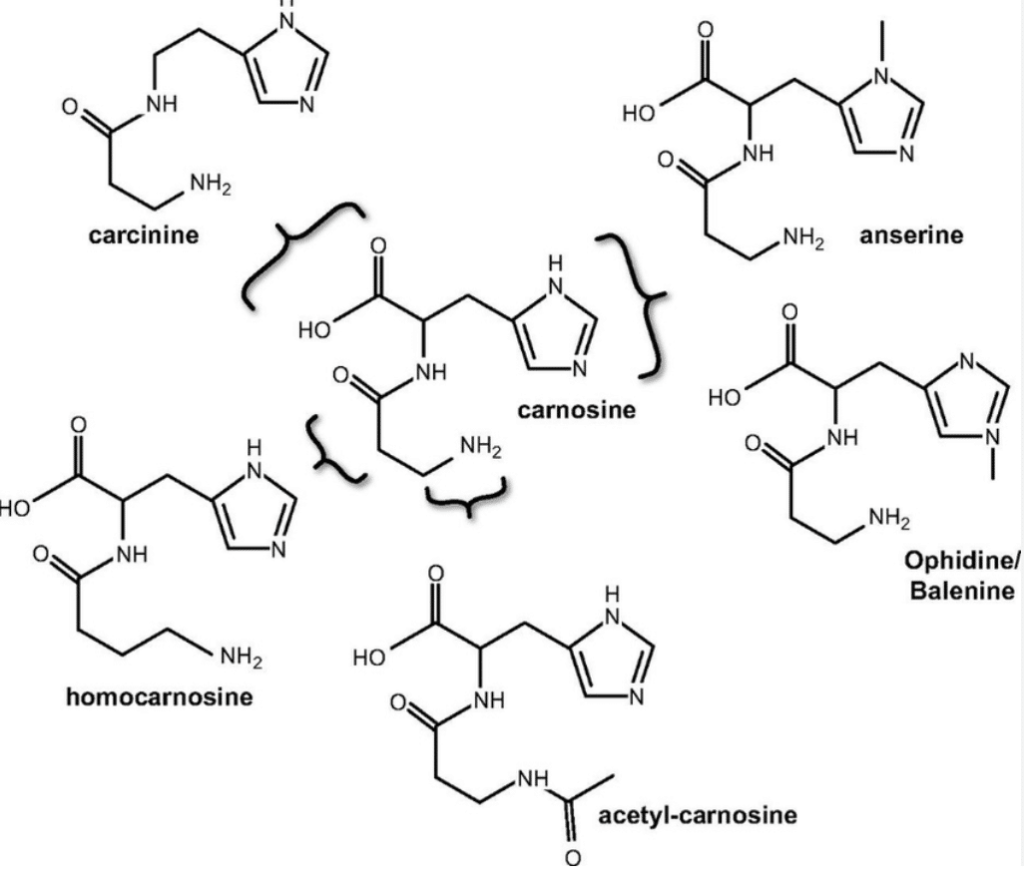
Carnosine (β-alanyl-l-histidine) is a natural ACE inhibitor and a powerful antioxidant. Made up of two amino acids (alanine and histidine), it acts as a free radical scavenger protecting cells against free radical damage. It was first discovered in the 1900s by Russian chemist V.S. Gulewitch. Carnosine is naturally produced in the body and is highly concentrated in the brain and muscle tissue. It can be obtained naturally through your diet as it is found in beef and fish, while lower concentrations are found in chicken. Supplementation with carnosine has been tested in many disease states where ischemia or oxidative stress are involved, and promising clinical and preclinical results have been obtained in pathologies such as diabetes and its complications, aging, neurological disorders and ocular disease.
The synthetic form of carnosine is sold as a supplement. It has been found useful in the following conditions;
Complications related to diabetes
Cataracts
Autism
High blood pressure
Kidney problems
As carnosine has been discovered to have anti-inflammatory and powerful antioxidant properties, protecting cells from free radical damage, it may hold a valuable place in many chronic disease states and age-related diseases, some of which I will explain below.
Carnosine: Benefits, Side Effects, Dosage, and Interactions (verywellhealth.com)
Dosage
Suggested dosage recommendations vary as a therapeutic dosage is yet to be proven.
The best dose will depend on your current health status and the reason you are supplementing.
One source suggested 500-2,000 mg daily for up to 12 weeks.
Carnosine is a dipeptide; it is known by other names such as L-carnosine and n-acetyl-carnosine. The simple explanation of a dipeptide is an organic compound made up of two amino acids. It is synthesised in the human body in skeletal muscle from the two amino acids, histidine and beta-alanine. Carnosine is degraded by the enzyme serum carnosinase, encoded by the CNDP1 gene and is synthesised by the enzyme carnosine synthase. It has been found to assist different metabolic pathways within the kidney and research suggests it reduces proinflammatory and profibrotic cytokines, decreases mesangial cell proliferation, may act as a natural angiotensin-converting enzyme inhibitor and inhibits advanced glycation end product (AGEs) formation. AGEs are harmful compounds formed when protein or fat are combined with sugar in the bloodstream, they are prevalent in diabetic vasculature and contribute to the development of atherosclerosis.
Cell culture studies have shown that carnosinase activity was increased in hyperglycaemia, it has also been reported that polymorphisms in the carnosinase gene (CNDP1) predict the progression to end-stage renal disease in those with Type 1 diabetes and diabetic nephropathy. Animal studies have demonstrated that supplementation with carnosine reduced insulin resistance and plasma concentrations of lipids, inflammatory markers and glucose. It has also been shown to delay the development of atherosclerosis.
Carnosine has been found to have renoprotective properties and has promising potential in the treatment and prevention of different types of kidney disease, particularly chronic kidney disease (CKD).
A 2003 study investigated the effect of L-carnosine on ischaemic acute renal failure in rats. This was induced by the occlusion of the left renal artery and vein for 45 minutes followed by reperfusion (restoration of blood flow), two weeks after the contralateral nephrectomy. Renal function in untreated acute renal failure rats reduced 1 day after reperfusion, in comparison, pre-ischaemic treatment with L-carnosine (1, 10 microg/kg, i.v.), decreased the ischemia/reperfusion-induced renal dysfunction. On examination, they found, of the untreated renal failure rats, severe renal damage was revealed, however, it was significantly suppressed by the pre-treatment of L-carnosine with each dose given. In summary, results indicated, L-carnosine may prevent the development of ischemia/reperfusion-induced renal injury.
Diabetic nephropathy is a severe complication of Type 1 and 2 diabetes, it has become the leading cause of end-stage renal failure in the Western world. Several studies have concluded that pharmacologic inhibition of the renin-angiotensin system delays the progression in those with diabetic nephropathy. AGEs bring about the production of angiotensin II in mesangial cells and the binding of AGEs to the receptor for AGEs is believed to mediate the release of reactive oxygen species (ROS) in the mesangial cells in kidneys impacted by diabetic nephropathy.
A 2017 study examined the effect of carnosine on mice with diabetic nephropathy. Their results demonstrated that carnosine improved glucose metabolism and albuminuria, and kidney weights were reduced in the carnosine-treated mice, showing less glomerular hypertrophy. Researchers concluded treatment with carnosine could be a consideration in those patients with diabetic nephropathy and/or used to prevent diabetic nephropathy in those with diabetes.
Gentamicin (GM) is an antibiotic; it has been found to be toxic to certain kidney cells. If gentamicin is given for too long or at a dose that is too high, progressive kidney failure can occur. As gentamicin is excreted through urine, when the kidneys fail, gentamicin is also excreted. This leads to a higher level of gentamicin in the bloodstream, which may, in turn, further damage the kidneys. A 2007 study investigated carnosine and its potential to protect the kidneys in gentamicin-induced toxicity.
The rats were divided into seven groups of 10
One control group
Two healthy carnosine groups
Two GM groups
Two carnosine GM groups
The study found the protective effect of carnosine on GM-induced nephrotoxicity was attributed to its double antioxidant action, activation of the immune system, preservation of membrane fluidity and protein molecule protection. They concluded that carnosine offers a promise in supporting those with GM nephrotoxicity.
Preventing and slowing the progression of prediabetes to diabetes is a major therapeutic goal. A 2015 randomised, placebo-controlled trial evaluated the effects of a four-month treatment with a supplement containing cinnamon, chromium and carnosine in moderately obese or overweight prediabetic patients. One of the primary outcomes was a change in fasting plasma glucose (FPG); other parameters were plasma glucose homeostasis, lipid profile, adiposity and inflammatory markers. The study found that, after four months of treatment with the supplement containing cinnamon, chromium and carnosine, FPG was decreased, and there was an increase in fat-free mass in overweight or obese prediabetic subjects. Once again, carnosine is showing promising results.
Another double-blind, placebo-controlled, randomised clinical trial assessed the potential of L-carnosine in those with type 2 diabetes. It was hypothesised that L-carnosine could improve glycaemic control, lipid profiles, AGE, soluble receptor of AGEs and inflammatory markers. They recruited 54 patients with T2D, who were either assigned to the intervention group (n = 27, receiving 2 capsules of l-carnosine 500 mg each) or the control (n = 27).
After 12 weeks, they found, the intervention group taking L-carnosine resulted in a significant decrease in fat mass, reduced fasting blood glucose, glycated haemoglobin and serum triglycerides.
Hopefully, this summary outlines some important insights regarding the use of carnosine for the prevention of chronic diseases. As shown, carnosine has been found to possess anti-inflammatory and powerful antioxidant properties; in the future, it may hold a valuable place in many chronic disease states and age-related diseases.
Please remember, as with any dietary/ supplemental change in those with a chronic health concern, to make sure you consult your health professional first.
Feel free to share this article with friends and family, or head over to our Facebook page and leave us a comment.
Vasopressin is a hormone that plays a central role in how your body manages fluid balance, but its effects go far beyond simply keeping you hydrated. Growing research reveals that vasopressin is closely linked to kidney function, the progression of chronic kidney disease (CKD), and broader metabolic health. While many people have heard of vasopressin…
Polycystic kidney disease (PKD) is widely understood as a progressive genetic disorder characterised by the relentless formation and expansion of fluid-filled cysts within the kidneys. Over time, these cysts multiply and enlarge, gradually displacing healthy renal tissue and driving progressive loss of kidney function. PKD can also affect the liver and pancreas, and is associated…
Autoimmune diseases are a group of conditions in which the immune system mistakenly attacks the body’s own tissues. When exploring the connection between autoimmune disease, gut health, and chronic kidney disease (CKD), several key autoimmune conditions are particularly relevant. These include Systemic Lupus Erythematosus, IgA Nephropathy, ANCA-Associated Vasculitis (AAV), Anti-Glomerular Basement Membrane Disease, Sjögren’s Syndrome,…

 By Libby Shaw